Introduction
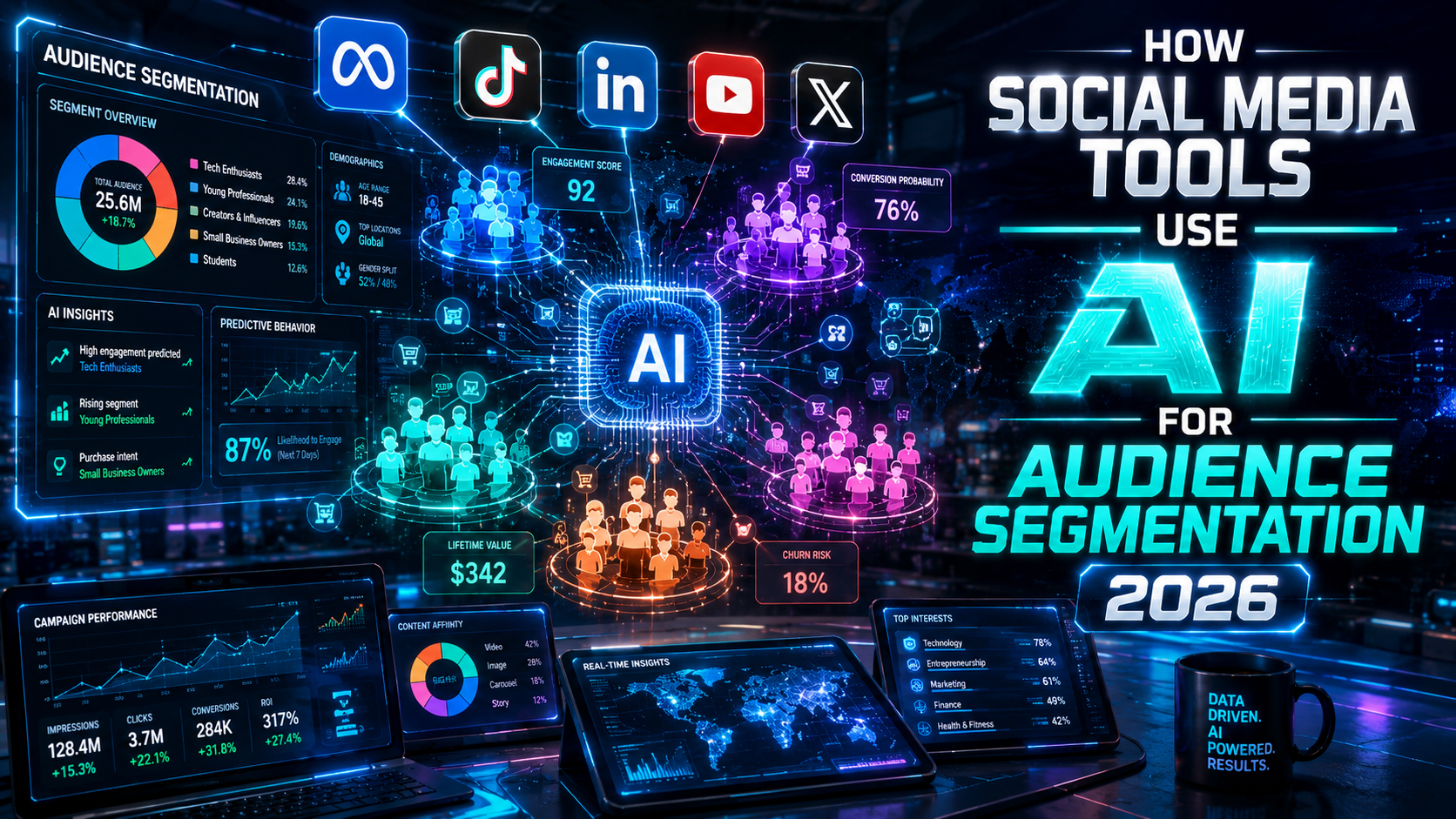
AI audience segmentation is the automated process of using machine learning algorithms, real-time behavioral data, and predictive modeling to divide social media users into highly targeted clusters. Rather than relying on static, manually created demographics (like age or broad interests), modern AI tools analyze thousands of subtle signals—scroll speed, video completion rates, intent searches, and conversational touchpoints—to match each user with the most relevant content or advertisement in real time.
Marketers adopt AI-powered audience segmentation because post-cookie privacy changes have eroded traditional third-party tracking. By harnessing first-party behavioral signals, AI segmentation enables brands to lower customer acquisition costs (CAC) by up to 31% while delivering up to 23% higher conversion rates. When combined with specialized AI tools for content creation and automated campaign workflows, AI targeting transforms raw data into a scalable competitive advantage.
Updated for 2026, this guide breaks down how major social platforms (Meta, TikTok, LinkedIn, YouTube, X) utilize AI for audience segmentation, the core technologies powering these systems, real-world business use cases, common pitfalls to avoid, best practices, and actionable recommendations for businesses of every size.
⚡ Quick Summary: AI Audience Segmentation in 2026
- What is AI Audience Segmentation? The use of machine learning, real-time behavioral tracking, and predictive algorithms to automatically group social media users into dynamic, high-intent segments without manual list building.
- Best Use Cases: Automated lookalike audience expansion, predictive retargeting, dynamic ad creative matching, multi-channel customer lifecycle tracking, and localized content delivery.
- Who Benefits Most: Digital marketers, growth agencies, e-commerce stores, B2B SaaS companies, and content creators aiming to maximize advertising ROI and organic reach.
- Key Takeaway: Modern AI segmentation relies on creative diversity and high-quality first-party data. Broad targeting powered by AI algorithms (like Meta Advantage+ or TikTok Smart+) consistently outperforms manual interest-stacking.
Key Takeaways
- AI audience segmentation uses machine learning to automatically group social media users based on real-time behavior and purchase intent.
- First-party conversion data has become essential for ad targeting as privacy regulations restrict third-party tracking.
- Broad audience targeting powered by AI algorithms consistently delivers lower customer acquisition costs than manual interest stacking.
- Ad creative quality acts as the primary targeting filter in modern AI advertising platforms.
- Major platforms excel at different strengths, from Meta for scaled e-commerce to LinkedIn for B2B predictive audiences.
- Implementing server-side event tracking and testing diverse creative angles are critical for long-term ad performance.
Who Should Read This Guide?
This guide is engineered to provide actionable value across several key roles in the digital ecosystem:
- Digital & Performance Marketers: Learn how to transition from manual interest-stacking to AI-driven campaign structures that optimize CPA and ROAS.
- Small Business Owners & Bootstrapped Brands: Discover how platform-native AI tools level the playing field against enterprise budgets.
- Growth & Paid Media Agencies: Master multi-channel AI segmentation strategies (Meta, TikTok, LinkedIn, YouTube) to scale client acquisition.
- Content Creators & Influencers: Understand how platform recommendation algorithms (e.g., TikTok FYP, YouTube Shorts) utilize behavioral signals for organic discovery.
- E-Commerce & DTC Retailers: Leverage dynamic catalog retargeting and predictive purchase intent to boost lifetime value (LTV).
- B2B SaaS Companies: Harness LinkedIn Predictive Audiences and buying-committee detection to shorten sales cycles.
- Marketing Students & Researchers: Gain a clear, technical, yet accessible understanding of modern machine learning applications in digital advertising.
How We Evaluated This Topic
Our evaluation of AI audience segmentation capabilities across social media platforms is grounded in a rigorous, evidence-based methodology:
- Official Platform Documentation: Deep analysis of official engineering whitepapers and advertiser documentation for Meta Advantage+, TikTok Smart+, LinkedIn Campaign Manager, and Google Demand Gen.
- Verified Performance Benchmarks: Cross-referencing published case studies and platform-reported metrics (e.g., Meta's 32% CPA reduction, LinkedIn's 21% CPL decrease).
- Industry Best Practices: Synthesizing framework recommendations from leading digital privacy standards (GDPR, CCPA) and server-side tracking implementations (Conversions API).
- Feature & Capability Comparisons: Structured evaluation of machine learning architectures, data input requirements, creative dependency thresholds, and targeting granularity across major platforms.
What Is Audience Segmentation?
At its core, audience segmentation is the practice of dividing your total potential customer base or audience into smaller, distinct groups based on shared characteristics—so you can deliver more relevant messages, offers, and content.
Traditionally, segmentation relied on static demographic slices: age, gender, geographic region, or broad interest categories. For example, a sports apparel brand might target "women aged 25–40 interested in fitness." While functional, this approach is blunt and ignores real-time buying intent.
Modern social media tools use AI and continuous data ingestion to build and update segments automatically. Instead of static demographic rules, an AI-powered segment dynamically identifies: "women who watched 80% of three running workout videos in the last 5 days, clicked on athleisure ads in the past 14 days, and exhibit engagement patterns suggesting high purchase intent." This dynamic depth transforms audience targeting from reactive guessing into predictive precision.
Why AI Matters for Audience Segmentation in 2026
1. The Signal Ingestion & Scale Problem
Every active user generates thousands of behavioral signals daily—scroll velocity, video watch percentage, re-watches, comment sentiment, link clicks, and time-of-day activity. Human analysts cannot process or pattern-match this volume at scale. Machine learning models thrive on high-dimensional data, extracting actionable micro-segments instantly.
2. Adapting to the Post-Cookie Privacy Era
Changes like Apple’s App Tracking Transparency (ATT), cookie deprecation, and global privacy regulations have severely restricted third-party data tracking. AI segmentation compensates by leveraging first-party behavioral signals, server-side event tracking, and probabilistic modeling. Rather than tracking users across external sites, algorithms model intent directly from platform interactions.
3. Shift from Historical Data to Predictive Intent
Traditional segmentation looked backward: "this user bought shoes 6 months ago." AI segmentation operates predictively: "based on real-time signal clusters, this user has a 78% probability of purchasing running gear within the next 7 days." As predictive algorithms transform marketing roles, understanding which jobs AI will automate in 2026 helps growth teams focus human effort on high-leverage strategic creative.
4. Drastic Reduction in Wasted Ad Spend
AI targeting reduces manual audience research from 4–6 hours per campaign down to 15 minutes. More importantly, real-time optimization continuously reallocates budget away from non-converting audience pockets, minimizing ad fatigue and budget waste across campaigns.
How AI Audience Segmentation Works (The Core Mechanics)
To use these tools effectively, marketers must understand the underlying techniques powering modern ad delivery systems:
1. Behavioral Analysis
Groups users based on active behavior rather than passive profiles. Signal clusters include watch duration, comment frequency, profile visits, post saves, and link clicks. Behavioral clusters reveal true engagement depth.
2. Purchase History & Transactional Data
By connecting server-side event streams (like Meta Conversions API or TikTok Events API), AI models ingest purchase values, cart additions, and checkout events. This enables predictive high-lifetime-value (LTV) segmentation.
3. Demographics & Firmographics
While secondary to behavioral signals in modern AI systems, demographic data (age, location, gender) and B2B firmographics (company size, industry, job title) provide foundational boundary conditions for targeting.
4. Machine Learning & Predictive Modeling
Deep neural networks analyze historical conversion paths to calculate real-time probability scores for every user. The algorithm continuously refines these probabilistic profiles as new conversion events flow back to the server.
5. Automated Lookalike & Look-Similar Audiences
Marketers supply a "seed list" (e.g., top 1,000 customers). AI identifies subtle multidimensional traits shared across the seed group, then searches the platform's user base for matching behavioral profiles, scaling cold traffic with warm conversion traits.
6. Natural Language Processing (NLP) & Conversational Intent
NLP enables platforms to analyze text captions, comments, search queries, and conversational AI interactions (such as Meta AI interactions across WhatsApp, Messenger, and Instagram). Conversational intent feeds directly into real-time ad targeting.
7. Computer Vision & Content Recognition
AI models scan image and video pixels to detect objects, scenes, and audio themes. TikTok and YouTube utilize computer vision to match video ad creative with users whose watch histories demonstrate strong affinity for identical visual contexts—a capability especially relevant when producing assets with modern AI tools for motion graphics.
8. Personalization & Dynamic Creative Matching
AI connects segment identification with creative delivery. Rather than showing one static ad to everyone, the system pairs specific ad angles (e.g., price-focused vs. feature-focused) with the precise segment most likely to convert.
Pros & Limitations of AI Audience Segmentation
While AI-driven segmentation offers significant advantages over manual targeting, it is not a silver bullet. Understanding both its core strengths and operational constraints ensures realistic campaign planning:
✓ Key Benefits
- Better Audience Relevance: Matches ads and content to users based on real-time interest and purchase signals.
- Lower Acquisition Costs: Automatically shifts budget away from non-converting audience groups to lower CPA.
- Faster Audience Analysis: Processes millions of complex behavioral data points in seconds instead of hours.
- Improved Use of First-Party Data: Maximizes the value of customer lists and server-side tracking data.
- Scalable Campaign Optimization: Continuously updates target segments as user behaviors and trends change.
- Personalized Customer Experiences: Delivers tailored message angles to specific audience micro-clusters automatically.
✕ Current Limitations
- Depends on Data Quality: Low-quality tracking data or small seed lists lead to poor targeting results.
- Requires Strict Privacy Compliance: Demands careful consent management under GDPR, CCPA, and privacy laws.
- Potential Algorithm Bias: Models can over-index on historical buyer profiles, missing untapped audience groups.
- High Creative Dependency: Requires continuous testing of diverse creative variations to stay effective.
- Platform-Specific Silos: AI insights built on Meta do not directly transfer to TikTok or LinkedIn.
- Requires Human Oversight: Automated tools require strategic direction and periodic performance benchmarking.
Real-World Business Examples
To see how AI audience segmentation translates into daily operations, explore how different business types apply these technologies to solve specific growth challenges:
Direct-to-Consumer Apparel Brand
Cloud Project Management Software
Multi-Location Dental & Healthcare Clinic
Independent Tech & Gadget Reviewer
Full-Service Paid Media Agency
Global Electronics Manufacturer
How Major Social Platforms Use AI for Audience Segmentation
Meta (Facebook and Instagram)
Meta remains the industry benchmark for AI-automated ad targeting and delivery.
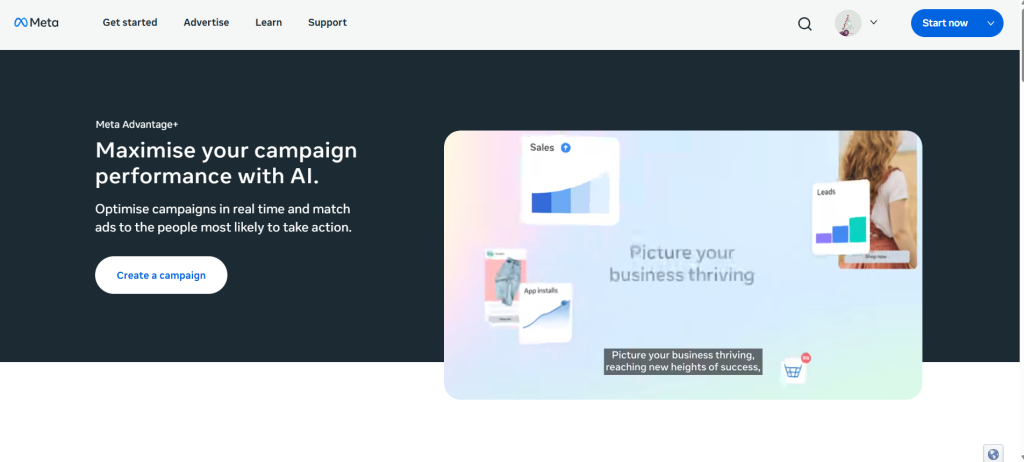
Advantage+ Audience: Meta’s default targeting engine treats manual inputs (age, gender, interests) as soft hints rather than strict boundaries. The AI evaluates your hints against pixel conversion data and broad platform behavior to find high-intent buyers outside your specified targeting box. Internal benchmarks demonstrate up to a 32% reduction in CPA for e-commerce and lead-gen campaigns using Advantage+ Audience.
The Andromeda Deep Learning Architecture: Meta’s Andromeda engine processes real-time conversion feedback alongside creative visual features. In 2026, your ad creative serves as the primary targeting filter: Meta's AI observes who engages with different visual hooks and automatically expands delivery to matching user clusters.
AI Chat Conversational Signals: Conversational inputs from Meta AI across WhatsApp, Instagram DMs, Messenger, and Facebook feed anonymized intent signals directly into ad targeting algorithms. Explicit product queries made to Meta AI represent a powerful new intent layer.
Key Benefit: Unmatched scale and automated CPA reduction.
Limitation: Reduced manual control over exact interest criteria.
Pairing Meta Advantage+ with high-volume creative production tools—such as generating visual variations with Adobe Firefly—gives Meta's algorithm the creative diversity required to maximize segment discovery.
TikTok
TikTok’s segmentation paradigm differs from traditional social networks, placing content affinity above social graphs.
The For You Page (FYP) as a Real-Time Segmenter: TikTok’s recommendation engine tests every video against a small seed group. If engagement metrics (watch completion rate, re-watches, shares) exceed threshold targets, the AI expands distribution to broader cohorts exhibiting identical behavioral patterns.
TikTok Smart+ Campaigns & Symphony AI: TikTok Smart+ automates audience matching, bidding, and creative placement. Paired with TikTok Symphony AI tools, creators and brands can quickly generate localized video variations. For brands building spokesperson-led video content at scale, AI talking avatar generators are increasingly used to produce platform-ready video without on-camera filming. When building localized global campaigns, utilizing AI avatar tools for multilingual voiceovers allows brands to scale video content across international language segments seamlessly.
Key Benefit: High engagement rates (5–8x higher than static social feeds).
Limitation: Heavy reliance on continuous short-form video creative refresh.
LinkedIn leverages the world's most detailed, self-maintained professional B2B dataset.
Predictive Audiences: LinkedIn Predictive Audiences combine first-party CRM conversion data with LinkedIn’s economic graph to identify decision-makers likely to convert. Benchmark data indicates an average 21% lower cost-per-lead (CPL) when campaigns are seeded with 100+ verified conversion events.
Buying Committee & Coalition Role Detection: B2B purchasing decisions rarely involve a single buyer. LinkedIn AI identifies the full buying committee across an organization—VPs, financial approvers, and technical implementers—ensuring enterprise campaigns cover every decision touchpoint.
Key Benefit: Unrivaled firmographic and professional targeting accuracy.
Limitation: Higher CPC/CPM costs; requires sufficient conversion volume for predictive modeling.
YouTube (Google Ecosystem)
YouTube merges Google search intent, Play Store activity, Maps navigation, and video viewing behavior into unified predictive segments.
Custom Intent & Demand Gen Campaigns: Custom Intent enables brands to target users based on recent Google search queries. Demand Gen campaigns leverage AI to distribute video and visual assets across YouTube, Discover, and Gmail, automatically shifting budget to high-performing audience touchpoints.
For video creation teams producing high volumes of segmented video material, incorporating AI talking avatar generators provides an efficient path to scale personalized video messaging without expensive video shoots.
X (Formerly Twitter)
Rebuilt with semantic contextual models, X’s targeting engine categorizes active conversation threads, topic sentiment, and real-time interest clusters. This contextual approach excels for event-adjacent campaigns, product drops, and breaking news trends.
When producing voiceovers or audio assets for social video ads across X, Meta, or YouTube, tools like Murf AI provide studio-quality voice generation tailored to distinct audience personas.
Platform AI Capabilities Comparison Table
The table below summarizes how each major social media platform utilizes AI for audience segmentation in 2026:
| Platform | Key AI Features | Segmentation Focus | Best For | Biggest Strength | Biggest Limitation |
|---|---|---|---|---|---|
| Meta | Advantage+ Audience, Andromeda Engine, AI Chat Signals | Behavioral + Predictive Purchase Intent | E-commerce, DTC, Scaled Lead Gen | 32% lower CPA; massive data scale | Reduced manual interest control |
| TikTok | FYP Real-Time Testing, Smart+ Automation, Computer Vision | Behavioral + Content Visual Affinity | DTC Brands, Gen Z, Viral Organic Growth | 5–8x higher engagement; creator discovery | High creative fatigue rate |
| Predictive Audiences, Buying Committee AI, AI Bidding | Professional + Firmographic Graph | B2B SaaS, Enterprise Lead Gen | 21% lower CPL; verified job data | High CPCs; requires 100+ conversion seeds | |
| YouTube | Custom Intent, Demand Gen AI, Multi-Signal Tracking | Search Query Intent + Video Context | Full-Funnel Video, Search-Adjacent Ads | Google search ecosystem intelligence | Higher video production demands |
| X (Twitter) | Semantic Thread Ranking, Contextual Relevance AI | Real-Time Conversation & Sentiment | Product Launches, Live Events, PR | Real-time trending topic alignment | Smaller overall monthly active base |
Platform-Specific Business Use Cases
1. E-Commerce Automated Retargeting
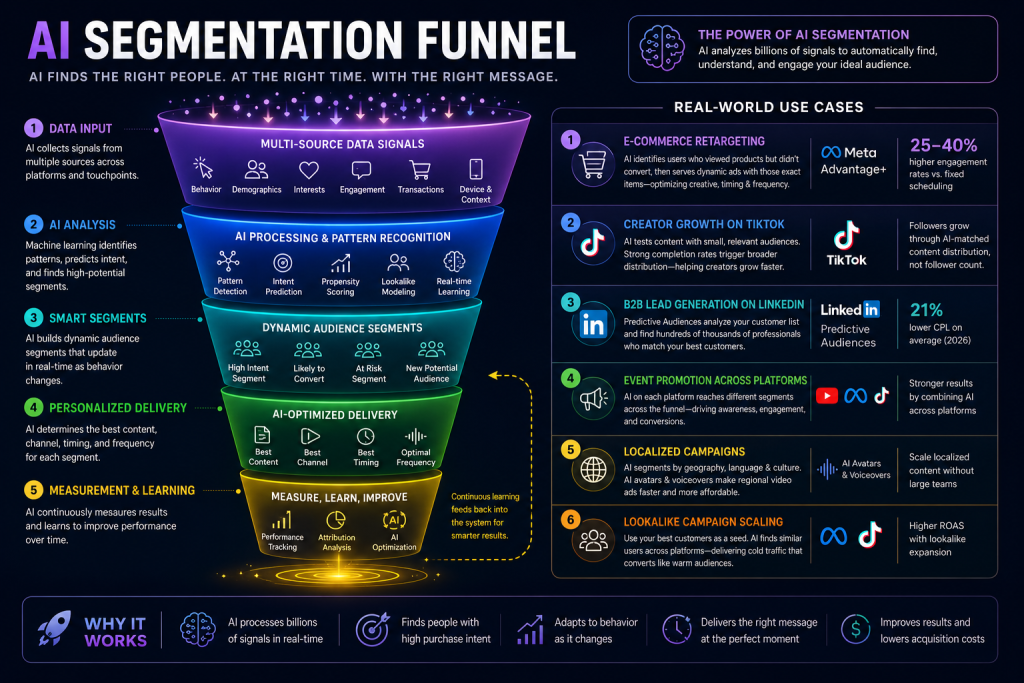
An online footwear retailer connects Meta Conversions API with Advantage+ Catalog Ads. AI tracks users who viewed specific sneaker models, analyzing scroll pause time and cart adds. The system automatically serves tailored dynamic ads featuring exact product views at the precise hour when each user demonstrates peak conversion probability, achieving 25–40% ROAS improvements over static scheduling.
2. B2B SaaS Enterprise Prospecting
A DevOps software company uploads 500 closed-won customer CRM records to LinkedIn Campaign Manager. Predictive Audiences cross-references job titles, company growth stages, and content engagement history to generate a target audience of 250,000 matching tech leaders, reducing CPL by 21% while reaching previously unidentified buying committee members.
3. Creator Organic Expansion on TikTok
A financial literacy creator uploads short-form tutorials. TikTok's recommendation AI tests the video with an initial cohort of 300 users who frequently watch budgeting content. High completion rates trigger distribution expansion to broader interest segments, driving 50,000+ views without relying on an existing follower baseline.
Common Mistakes Marketers Make with AI Segmentation
- Over-Constraining the Algorithm (Fighting AI): Stacking 15 narrow interest rules inside Advantage+ or Smart+ campaigns starves machine learning models of data. Start with broad boundaries and let the AI find converters.
- Neglecting First-Party Data Quality: Feeding algorithms broken tracking pixels or unverified CRM lists results in poor optimization. Clean data auditing processes—similar to standards in freelance AI data annotation workflows—are crucial to ensure high-signal model inputs.
- Relying on Automation Without Creative Strategy: While AI handles audience delivery, humans must supply diverse creative hooks. Running only 1 or 2 static ad variants restricts the algorithm's learning capacity.
- Ignoring Privacy & Regulatory Compliance: Operating AI audience targeting without proper consent management (GDPR/CCPA compliant banner banners and server-side consent hashing) exposes brands to legal liabilities.
- Treating Segments as Static: Customer behavior shifts seasonally and economically. AI segmentation models must be continuously refreshed with updated conversion seeds.
Common Myths About AI Audience Segmentation
Despite widespread adoption, several persistent misconceptions distort how marketers view AI-powered audience targeting. Clearing up these myths helps teams build realistic expectations and better strategy:
Best Practices for AI-Powered Audience Targeting
- Implement Server-Side Tracking: Deploy Meta Conversions API, TikTok Events API, and Google Tag Manager Server-Side to supply robust first-party signal streams directly to ad engine neural networks.
- Scale Creative Diversity: Provide 10–15 distinct creative concepts per campaign—varying hooks, visual styles, problem statements, and formats (video, carousel, static)—giving the algorithm surface area to match creative variants with user sub-segments.
- Seed AI Models with High-Value Conversions: When building lookalikes or predictive audiences, seed with your top 20% highest LTV customers rather than generic email sign-ups.
- Benchmark AI Against Manual Controls: Periodically run clean A/B tests comparing automated Advantage+/Smart+ campaigns against manual targeting baselines, referencing our in-depth AI tool reviews to evaluate software performance.
- Combine Platform AI with Market Intelligence: Use third-party audience research tools alongside conversational platforms like ChatGPT alternatives to mine audience pain points before building ad creative.
Privacy & Ethical Considerations
As social media platforms deploy increasingly sophisticated machine learning models for audience targeting, marketers must navigate a complex landscape of data privacy regulations and ethical responsibilities. Balancing computational ad performance with consumer trust is essential for long-term brand equity.
1. Regulatory Compliance (GDPR & CCPA/CPRA)
Global privacy regulations, such as the European Union’s General Data Protection Regulation (GDPR) and the California Consumer Privacy Act (CCPA/CPRA), strictly govern how consumer data is collected, stored, and processed for targeted advertising. Under GDPR, automated profiling and targeted ad delivery require explicit user consent. Marketers operating across international borders must ensure that pixel tracking, server-side data streams, and audience seed lists strictly comply with regional data governance rules.
2. Consent Management & First-Party Data Strategy
With third-party tracking cookies phasing out across major browsers, advertisers rely heavily on first-party data (CRM email lists, purchase histories, and site activity). However, collecting first-party data requires robust Consent Management Platforms (CMPs). Users must be provided with clear opt-in and opt-out mechanisms. When uploading customer email lists or connecting server-side event APIs (such as Meta CAPI or TikTok Events API), data must be cryptographically hashed (SHA-256) to safeguard personally identifiable information (PII).
3. Responsible AI Practices & Algorithmic Bias
Machine learning models learn patterns exclusively from historical dataset inputs. If an organization's historical conversion data reflects systemic demographic or socio-economic biases, an AI targeting model may unintentionally perpetuate those biases—over-indexing on specific user groups while unfairly excluding others. Responsible AI governance involves auditing campaign delivery demographics, ensuring fair housing/employment/credit targeting practices, and maintaining human oversight over machine-automated campaign decisions.
4. Data Transparency & Consumer Trust
Consumers in 2026 are increasingly aware of behavioral tracking, including the integration of conversational AI inputs into ad engines. Brands that prioritize data transparency—clearly communicating what data is collected, how AI models process intent, and how users can manage their ad preferences—build stronger customer trust. Respecting user privacy choices and maintaining clear data retention schedules ensures that AI-driven personalization enhances, rather than damages, brand reputation.
Choosing the Right Platform
Selecting the optimal ad platform depends on your specific business model, target audience behavior, and budget scale. The breakdown below details which platform AI engine aligns best with distinct marketing objectives:
Small Businesses & Bootstrapped Brands
Local Businesses & Brick-and-Mortar
B2B Marketing & Professional Services
Enterprise Brands & Global Organizations
Content Creators & Influencers
Shopify & DTC E-Commerce Stores
Direct Response & Lead Generation
Video Marketing & Brand Storytelling
Frequently Asked Questions
What is AI audience segmentation?
How does AI help social media targeting?
Which platform has the best AI segmentation in 2026?
Is AI audience targeting better than manual interest targeting?
How can small businesses get started with AI segmentation?
What is predictive audience segmentation?
How does privacy regulation (GDPR/CCPA) affect AI segmentation?
Why is creative quality crucial for AI targeting?
Can AI audience segmentation be used for organic social growth?
Final Recommendations by Business Type
Tailored Strategies for 2026:
- Small Businesses & Creators: Focus on one core platform (Meta or TikTok). Exhaust free native analytics tools, implement basic pixel tracking, and leverage broad targeting with strong creative hooks.
- Growth & Paid Media Agencies: Standardize server-side API setups across clients. Build automated reporting pipelines that prove CPL/CPA reductions via AI predictive audiences.
- E-Commerce Brands: Invest heavily in dynamic catalog ads paired with Meta Advantage+ and TikTok Smart+. Utilize AI generative tools to produce high-volume creative variants.
- Enterprise & B2B SaaS: Harness LinkedIn Predictive Audiences paired with account-based marketing (ABM) buying-committee detection. Integrate CRM conversion data for continuous AI feedback.
Sources & Reference Material
- Meta Business Help & Engineering Center: Meta Advantage+ Audience Architecture & Conversions API Setup Guide
- TikTok Business Learning Center: TikTok Smart+ Campaign Automation Framework & Symphony AI Creative Guidelines
- LinkedIn Marketing Solutions: Predictive Audiences & Buying Committee B2B Targeting Engineering Whitepaper
- Google Ads & YouTube Advertiser Help: Google Demand Gen Campaigns & Search-Intent Signals Best Practices
- EU EDPB & California CPPA: Regulatory Guidelines on Automated Profiling, Data Hashing & Consent Management
For deeper technical insights into modern AI workflows, explore our guide on AI tools for coding, compare AI conversational models in our ChatGPT alternatives review, or review the advantages and disadvantages of using chatbots in business automation.